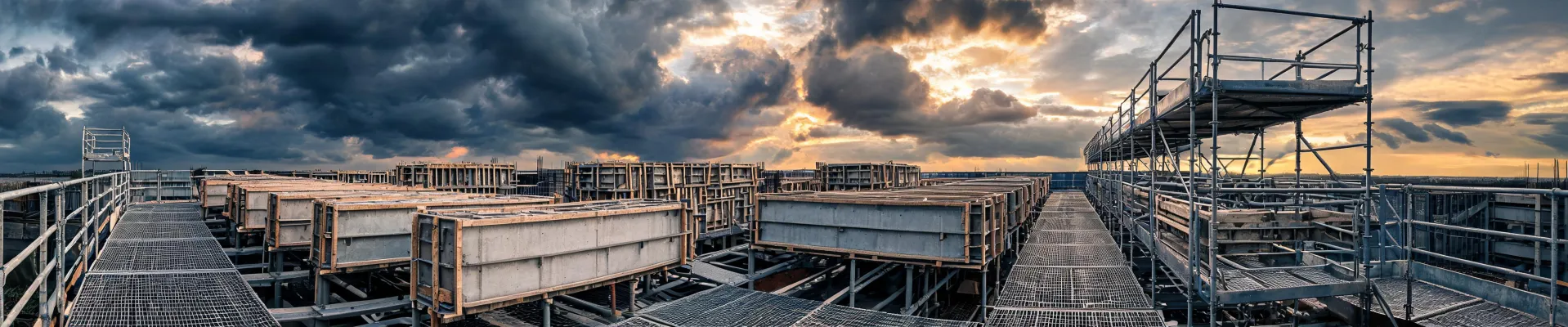
If you're specifying MEVA formwork systems in bulk for a commercial or infrastructure concrete project, here's the answer you need: the equipment is usually the easy part. Your success comes down to how you handle the specification—not which brand you choose. That's the pattern I've watched play out across 200+ rush formwork orders in seven years of coordinating emergency equipment deliveries.
I'm the person contractors call when the formwork doesn't fit, the shoring hasn't been engineered, or a pour date is 48 hours away and someone just realized they don't have enough panels. Some of those calls are genuine surprises. Most aren't. Roughly 60% of emergency formwork orders trace back to specification shortcuts taken four to six weeks earlier.
What I've seen in 200+ rush formwork orders
In March 2024, a contractor on the West Coast called me on a Thursday afternoon. They needed 1,200 square meters of wall formwork for a bridge abutment pour the following Saturday morning. Their original supplier had fabricated the wrong tie components because the shop drawings sat unchecked for two weeks. Missing that pour would have triggered a $50,000 penalty clause in their subcontract.
We made it happen. It took 36 hours, four phone calls, one expedited freight bill, and $28,000 in additional costs above the base order. The client's alternative was a construction delay measured in weeks and legal fees.
That story isn't unique. Looking at my own records across seven years, the pattern repeats: a team orders concrete formwork without rechecking the pressure ratings, assumes "compatible" accessories from two vendors will actually work together, or waits four weeks to review drawings because "it's basically the same as last time." It's not. And that mistake—the $18,000 one that shows up on the expediting invoice—has happened often enough that I've stopped counting.
Four things I check on any bulk concrete formwork order
1. Load calculations get verified before anything is ordered
Concrete formwork—especially wall formwork for tall elements—is engineered equipment. The lateral pressure of fresh concrete on the form face depends on pour rate, concrete temperature, mix design, and vibration method. According to ACI 347-14 (Guide to Formwork for Concrete, aci.org), formwork design must account for these variables. That calculation isn't a box-ticking exercise; it determines tie spacing, panel selection, and whether your crew is safe.
In 2022, a client placed a substantial MEVA Imperial order without rechecking their concrete pressure specification. They'd used the same panels the year before and figured the conditions were identical. They weren't. The pour rate was 40% higher, the formwork couldn't handle it, and the crew spent a full weekend adding ties and walers. Looking back, the issue wasn't the equipment. It was the assumption that last year's specs would carry over.
What I'd tell any buyer: have the load calc done for every new placement sequence. Even if the formwork is identical, the concrete mix or pour method might not be.
2. "Compatible" doesn't mean "identical"
When you're buying in bulk, the temptation is to source accessories from whoever has the best price on any given day. Tie rods from one distributor, clamps from another, locking pins from a third. Technically, components from different manufacturers might mate with MEVA panels. But each brand's tolerances are its own.
I've watched crews spend an extra hour per wall trying to seat a "compatible" tie head that was two millimeters off. I've seen a generic single-sided formwork prop fail during the first pour because the rating assumption was optimistic. And the exact phrase "we'll just make it work in the field" has cost contractors three times what they saved on generic hardware.
The lesson: if you're renting or buying MEVA Imperial or LITE systems, source the complete system from MEVA or an authorized distributor—including ties, cam locks, and accessories. If you're mixing systems, get written verification from the suppliers that the components are mechanically compatible, not just "kind of."
3. Bulk purchasing changes the decision criteria
Small orders are about availability. Bulk orders—go past $100,000 and this really kicks in—are about manufacturing lead times, supply chain stability, and specification freezing. Change one bolt size mid-production and you'll be charged for a new run, or you'll wait while parts get remanufactured.
MEVA handles bulk well because the Imperial and LITE ranges are standardized systems. They're not custom fabrications. That means predictable lead times and consistent quality. The catch is that your distributor still needs to have stock and surge capacity. Ask about their restocking timelines and what happens if a truckload is damaged on arrival. The answer tells you a lot about how your project will go.
4. Engineering specification is schedule insurance
Teams that hit deadlines treat the specification document as a deliverable, not a formality. A proper spec for concrete formwork and shoring systems includes:
- Concrete pressure loads, pour rates, and vibration methods
- Formwork category (wall, column, slab) and required finishes
- Tie rod spacing and pattern
- Waler and strongback requirements
- Pour sequence and stripping times
- Compliance with ACI 347, EN 12812, or applicable local codes
Shoring systems are particularly unforgiving. According to EN 12812 (Performance requirements and general design for falsework), falsework must be designed for all foreseeable actions, including construction loads and temporary states. Contractors have told me, "We'll just rent enough shoring frames and load them until it looks right." That's not a plan; that's how spans collapse.
Here's the reframe I give every client: "You're not buying formwork panels. You're buying a load path that's been verified by an engineer." Once that clicks, a proper system spec starts sounding a lot more reasonable than a "cheaper" alternative.
Where MEVA isn't the right call
I don't think every project needs branded system formwork. For small residential foundations or walls under two meters, a well-built timber form by an experienced crew is faster and cheaper. System formwork's advantages—reusability, pressure ratings, predictable cycles—only make sense when you're pouring enough volume to amortize the investment.
The other thing I'd watch for is over-engineering. I've seen clients choose high-pressure Imperial panels for light-duty walls where a LITE series would've been plenty. That's not a catastrophe; it's just wasted money. Be honest about your maximum pour pressure and match the equipment to it.
The bottom line
I don't have a financial stake in MEVA. My interest is practical: I'd rather spend a morning helping a client verify specifications than a week straightening out what happens when they don't.
If you specify correctly—verified load calculations, full-system compatibility, clear delivery terms, engineering signoff—MEVA formwork systems will serve you well, even on aggressive schedules. If you skip those steps, no brand will save you. The equipment isn't the common failure point. The specification is.
So the next time someone says "we'll figure it out in the field," I'd push back. It's not about being pessimistic. It's about the $28,000 expediting invoice I've seen enough times to know exactly what it looks like.