There’s a moment in every emergency order when someone else’s deadline becomes your entire week. Mine arrived at 3:40 p.m. on a Thursday in March 2024. Not the most dramatic call I’ve ever taken, but it’s in the top three.
The caller was a procurement manager at a mid-sized concrete contracting firm. No small talk. (Usually it’s a bad sign when they skip small talk.)
“Pour is Monday morning. Our wall formwork won’t be here in time. Can you help?”
That was the whole brief. A 3.6 m high retaining wall section, about 190 m² of formwork face, and a concrete pump booked for Monday. Under 48 hours of margin. Normal lead time for that scope? Seven to ten days.
I work on the logistics side of a formwork systems supplier, so I’m used to triaging panic. But this one had a twist: the technical choice was already made.
The engineer had already made the decision
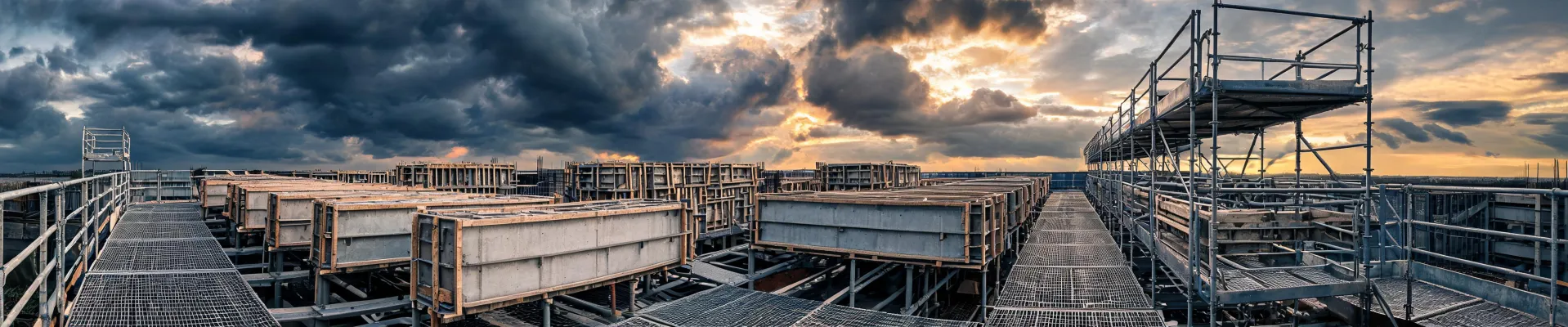
The project spec was written around MEVA formwork systems, with MEVA Imperial listed as the preferred large-panel system. The consultant wanted predictable tie patterns, tight joints, and a dense concrete face that wouldn’t need a patching crew behind it. The contractor’s original equipment arrangement had collapsed at the last minute, and the reasons mattered less than the date on the calendar.
Switching to another system would have needed fresh design checks. Theoretically possible. Not in 48 hours.
So the plan came down to one sentence: supply the MEVA Imperial panels from our regional depots, with all the walers, couplers and tie hardware the crew would expect, and get it to site before the pump arrived.
That sentence took about five minutes to say. The execution took all weekend.
The plan, and the price of speed
By 5:00 p.m. Thursday, we had two options.
The first option was a shared-load delivery that would arrive Tuesday. Useless.
The second was two dedicated trucks, one from our main yard and one from a depot about 190 km away. Freight cost: $2,850 instead of the usual $900 or so. The extra money didn’t buy better panels. It bought time.
I hesitated before sending the quote (which, honestly, was silly). The upside was a client who made their pour. The risk was that a $2,850 freight surcharge would kill the whole conversation before it started. I kept asking myself: is that freight cost worth potentially saving the client’s schedule?
Then the procurement manager asked the one question that matters: what happens if we don’t pour Monday? The next available pump and crew slot was eleven days out. Missed milestone. Weather risk. Whatever penalty clause was in their contract, they didn’t want to test it.
The expected value said book the trucks. The downside felt worse than the invoice.
We booked them.
The weather changed the plan on Friday
Friday started almost too smoothly. Panels were pulled, hardware was matched to the layout drawings, and the first truck was loaded by mid-afternoon. Then the forecast changed.
Snow was moving over the mountain pass on the only practical route to the site. The pass was scheduled to close from 10:00 p.m. Saturday. Our second truck wasn’t due to leave until Saturday morning. That no longer worked.
I spent two hours Friday evening on the phone with dispatchers, trying to find a driver willing to move the second load that night. There was a cost for that too: another $1,150 in overtime and dispatch fees. (Surprise, surprise: urgency is never discounted.) Around 9:00 p.m., the last call came through. The truck would leave at 5:00 a.m. Saturday, ahead of the closure.
Saturday passed in that strange quiet that happens when everything is moving but nobody can affect the outcome. Both trucks cleared the pass before the road closed. The first one arrived on site at 4:40 a.m. Sunday. The second at 8:15 a.m.
Twenty-one hours to spare.
Panels up, then a scaffolding surprise
Watching a crew erect large-area formwork on a Sunday morning is honestly more stressful than watching it on a normal workday. There’s no backup crew if something doesn’t fit. Every lift has to be right the first time.
MEVA Imperial helped there. The panels are big, which means fewer joints, and the crew had used them before. Section after section went up with minimal shimming. At 10:00 a.m., the site engineer ran a straightedge across the face of the first erected bay and just nodded. No notes. On a pour schedule like that, silence is basically applause.
Then, at around 5:00 p.m., the safety manager flagged the rolling scaffolds.
The pour crew planned to work at the top of the 3.6 m wall section, guiding the pump hose and vibrating concrete. The scaffolds they had rented for that were Baker-style rolling towers. But two of them had no manufacturer data plate, and the paperwork on site was outdated. The engineer’s rule was simple: no documented spec, no work at height.
A few of those scaffolds happened to come from a product line we manufacture for rental dealers under their own brands. That’s the quiet reality of scaffolding OEM work: your equipment often ends up on site wearing somebody else’s sticker.
Their rental dealer had branded the towers, but the underlying engineering file was ours. A quick call to our office, and we sent over the full documentation package—load ratings, platform limits, height-to-base ratios, assembly and inspection requirements. In plain terms, it was a baker scaffold specification guide, the kind of boring document that becomes priceless when a deadline is breathing down your neck.
By 8:45 p.m., the safety manager had what he needed. The scaffolds were approved for use the next morning.
Pour day, and what stuck with me
At 6:00 a.m. Monday, the pump arrived. Concrete started flowing at 6:40. The wall came up clean. By the time I checked in with the site team at noon, the pour was ahead of schedule, and the formwork had done what the engineer expected: no surprises.
And that’s the thing I keep coming back to after that weekend.
People talk about quality as if it means premium materials or expensive extras. In a rush order, quality means predictability. The panels fit because the system was engineered. The documents existed because the product was supported. The crew didn’t have to improvise with plywood, zip ties, or hope.
Speed is not the opposite of quality. Chaos is.
What I’d tell someone in the same position
If you’re on the buying side and a deadline is collapsing, here are the three things I’d check before signing anything.
First, check what your own crews know. A familiar system under time pressure is worth more than a cheaper or newer one nobody has assembled. Second, ask for a dedicated schedule, not “we’ll try.” A shared truck is cheaper until it isn’t. Third, ask about documentation early. Whether it’s formwork load calculations or a scaffold spec for access equipment, the paperwork can stop a pour just as fast as missing panels can.
One more note: the freight numbers above are what we paid in March 2024. The market changes fast, so verify current rates before you budget around them. But the lesson doesn’t change. In an emergency, quality isn’t luxury—it’s what lets everyone sleep on Sunday night and pour on Monday morning.