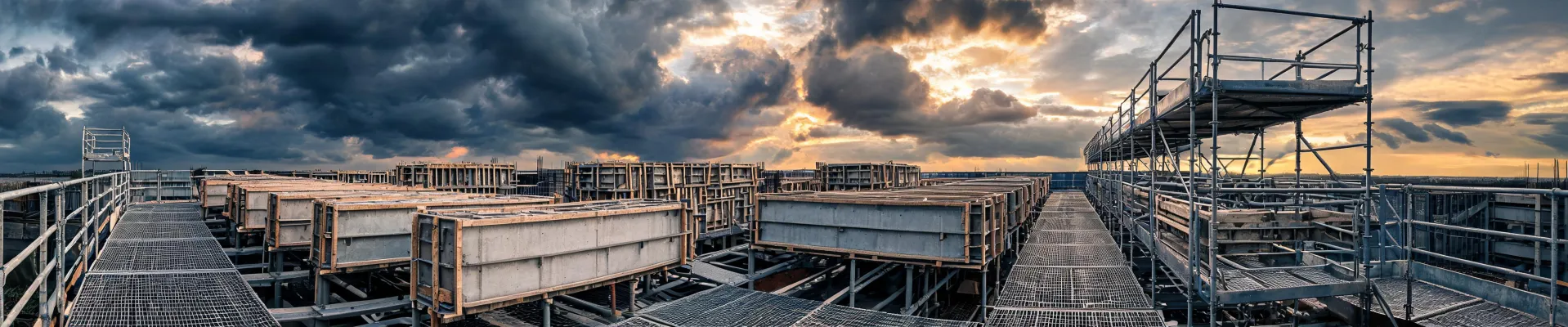
After six years of buying formwork and scaffolding for a mid-sized concrete contractor, my most direct procurement opinion is this: a supplier who won't tell you when you shouldn't buy from them is the most expensive vendor you'll ever work with.
I know that sounds counterintuitive. Long capability lists are supposed to reassure. “Formwork, shoring, scaffolding, accessories, custom engineering”—if one company does it all, that means fewer vendors to manage, right?
From the outside, it looks convenient. The reality is different. I manage roughly $400,000 a year in formwork and scaffolding material spend. Maybe closer to $380,000—I'd have to check the year-end report. Across six years of tracking every quote and change order, the clearest pattern I see isn't about product quality. It's about honesty. Suppliers with clear boundaries are the ones whose numbers I can predict.
The “we do everything” red flag
I've gone through maybe two dozen vendor evaluations in that time, from global manufacturers to local suppliers. When a vendor claims to do everything, one of two things is usually going on. Either they have deep engineering teams for every product line—rare—or they're brokering part of the scope and adding a margin. The second option is fine if it's declared. It's rarely declared.
Here's something vendors won't tell you: the quote is where the competition happens. Profit is protected later, through change orders and exclusions. That's not inherently dishonest. It becomes a problem on concrete projects because construction changes, and when a generalist supplier gets a design change they didn't anticipate, the hidden costs start to surface.
The first “no”: a pour that didn't need a system
In early 2025, we evaluated system formwork suppliers for a 14-story residential concrete frame. The project was big enough—around 6,000 square meters of wall and slab formwork—that a quality panel system would clearly pay for itself. MEVA formwork systems made the shortlist alongside two other manufacturers.
During the technical review, we stopped at a foundation wall section near the ramp. Low height, open access, no repetition above it. Maybe 35 square meters of contact area. My first instinct was to use one system everywhere for consistency. The MEVA representative pushed back.
“This wall is a one-off pour,” he said. “Timber formwork will be faster and cheaper here. Don't buy an engineered panel system for a pour that doesn't repeat.”
I pulled up our TCO spreadsheet. He was right. No crane time, no panel cleaning, no return freight, no tracking. The timber solution saved us a few thousand dollars on that single section. But the real value was the signal: a supplier who reduces its own scope when the engineering fit says so. From the outside, that looks like leaving money on the table. The reality is that they bought something harder to acquire—my trust for the rest of the package.
The second “no”: scaffolding has boundaries too
The same thing happened with scaffolding. Our package included shoring towers and support scaffold for the concrete structure, but we also needed perimeter access scaffold for later trades. We raised scaffolding wholesale as one combined inquiry. Most suppliers would have quoted everything.
MEVA's team did not. Their position was basically: our shoring and support scaffolds are engineered around wet concrete loads and formwork cycles. For simple facade access, a scaffold rental specialist with a large fleet will beat us on price and turnaround. That's the right tool for that job.
Honestly, I'm still not sure why more suppliers don't frame their scope this way. My best guess is that sales incentives reward bigger orders, and most buyers reward confidence. But the result was that MEVA's “yes” suddenly meant something. When they did quote the support scaffold, we knew it was the part they were genuinely best at.
They also sent a scaffolding specification guide for the support scaffold scope—and only for that scope. It included load tables, approved configurations, tie-in requirements, and, notably, a section describing what the system was not designed for. That last section told our engineer exactly where the certified envelope ended. That's rare.
Boundaries make total cost predictable
Why does this matter to someone whose job is controlling cost?
Because when you compare concrete formwork wholesale quotes, the price per square meter is usually within a narrow range. The real difference is the cost of surprises. If a supplier's actual capability is narrower than their quoted scope, you discover it late—through rework, replacement equipment, or engineering delays. That's the total cost of ownership that never appears on the initial price sheet.
On the 14-story project, MEVA's quote was not the lowest. It sat about four percent above the cheapest bidder. But the cheapest bidder couldn't produce a scaffolding specification guide that matched our engineer's review criteria, and they couldn't commit to load case support in writing. We estimated the cost of closing those gaps at roughly two weeks of schedule impact and additional engineering review time. Suddenly the four percent difference was not a premium. It was the economical option.
People assume the lowest quote means the supplier is more efficient. What they don't see is which costs are being deferred to later.
But what about a single point of accountability?
The objection I hear most is: “If I use a specialist for formwork and someone else for scaffolding, who do I hold accountable when something goes wrong?”
In theory, one supplier covering everything simplifies accountability. In practice, it depends on whether that supplier actually controls all those disciplines. If they're brokering half the scope and the real designer is a subcontractor, the accountability exists only on paper. When the issue surfaces, everyone points sideways.
I learned this the hard way in 2022. We bundled access scaffolding with a formwork supplier because it was simpler and the vendor assured us all scaffolding was basically the same for them. The hardware was adequate. The engineering support was not. When our structural design changed, we waited two weeks for revised drawings because one engineer was covering three product lines. Not ideal. The schedule absorbed it, but only just.
MEVA's approach was the opposite: they defined exactly where their engineering responsibility starts and ends. That made the interfaces cleaner, not messier.
What I'd tell any buyer
If you're sourcing formwork or scaffolding wholesale, ask every supplier one question: which part of our scope should we buy from someone else? Watch what happens. A supplier who gives you a thoughtful answer is probably a supplier worth trusting with the parts they say yes to.
MEVA formwork systems won our largest formwork contract of the year. Not because they offered the lowest panel price. Because they told us what not to buy from them, and that honesty made our total cost predictable. Bottom line: boundaries are not a limitation. For a procurement manager, they're a risk control feature.